Physical Address
304 North Cardinal St.
Dorchester Center, MA 02124
Physical Address
304 North Cardinal St.
Dorchester Center, MA 02124
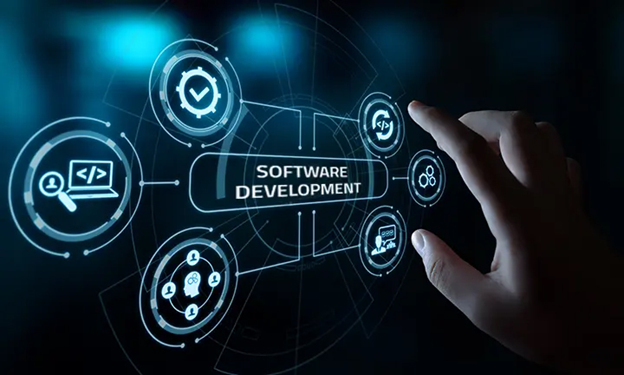
A custom software development firm is able to develop a perfect software solution that fits the exact objectives and challenges of a customer.
Generic tools are not used in the first place by custom developers; rather, they build programs that are very well suited to the businesses’ processes. A business in the present market, which is highly competitive, has no other option but to go for such a system that is flexible, safe, and, of course, scalable. Custom software development companies provide this opportunity by constructing one-off solutions that change the way tasks are done, and at the same time, lower the cost and improve the effectiveness.
Thus, these companies enable other businesses to enlarge their operation at a faster pace while having the technology and the innovation control of their own.
Every business, without fail, comes with its own set of processes. The first thing a top-notch software company does is to get a complete and in-depth understanding of those workflows.
By means of holding talks, going through documents, and conducting research, they get the insights to draw up a map of your operations. Next, engineers come up with and create the instruments for the automation of tiresome tasks and the enhancement of data handling. No matter if it is keeping track of stock, managing customers, or doing analytics, the priority of the business is reflected in every part.
Technology and strategy coexist perfectly through this custom-made method.
While the initial cost of off-the-shelf software may be lower, it rarely completely meets the needs of the business. Custom software development adjusts to your exact needs; thus, there are no unnecessary features or limitations.
A fresh and unambiguous comparison is provided below:
| Feature | Custom Software Firm | Off-the-Shelf Software |
| Design Approach | Crafted individually for your company, aligning perfectly with your specific workflows and goals. | A general design for all users, requiring you to adapt your business processes to fit the software. |
| Integration Capability | Built to smoothly integrate with your current systems and other platforms. | Integration options are very limited and can be messy or require expensive workarounds. |
| Scalability | Designed to expand with your business, easily accommodating more users, data, and features. | Has a fixed and inflexible structure, which can become a limiting factor as your business grows. |
| Security | Provides customized security and encryption protocols tailored to your industry and data needs. | Relies on uniform, built-in security standards, which can make it a target for widespread attacks. |
| Ownership Rights | You have the ownership and complete control of the source code and its management. | The vendor owns the platform, and you are often locked into their roadmap and pricing. |
| Cost Over Time | Requires a higher initial investment but can be more cost-effective in the long run by eliminating recurring fees. | Offers a lower initial cost, but recurring license and renewal fees can add up to a higher total cost over time. |
| Deployment Time | The development process takes longer, requiring weeks or months to complete, but ensures a perfect fit. | Can be deployed instantly, allowing for a quicker start. |
| Competitive Advantage | Provides a unique, tailor-made solution that competitors cannot easily replicate. | Provides standard, widely available features that are also used by competitors. |
A professional company has a clear and organized workflow that is easy to see.
This method makes sure that there is a flow of information and improvement that is not going to run out over time for each stage.
The process of quality assurance is a must, not an option, every step of the way. Daily QA engineers carry out many different tests, covering everything from functionality to user experience.
The safety of the product is assured from the ground up. The companies take measures against data breaches by employing encryption, secure APIs, and restricting access to sensitive information. Constantly updating and auditing the systems helps them to always be one step ahead of the hackers. The software is very human-friendly, plus, the protection that goes with it, thus, it is good and safe to use.
Tech-savvy firms now use diverse and advanced technologies to deliver scalable systems. The usual tech stacks are:
By combining these, firms create software that is flexible, high-performance, and future-ready.
Good communication is the very foundation of the software project. A trustworthy company constantly keeps you in the loop through weekly reports, demos, and feedback sessions.
They usually apply the likes of Slack, Jira, or Trello to ensure a smooth collaboration. This open communication clears up any misunderstandings and guarantees that the outcome is as per the client’s expectation. Effective communication further strengthens the relationship between the client and the company based on trust and a long-term partnership.
Before entering into a contract, take the time to assess your prospective partner thoroughly.
Look into these key factors:
Request for case studies or demonstrations to observe actual outcomes from their earlier projects.
Maintenance becomes increasingly important after the software is released. The companies keep an eye on the performance of the system and fix any issues while also adding new features as the demand changes. They do in addition, handle data that is backed up, patches for security, and checking if it is compatible with the system being upgraded. Regular maintenance keeps your software efficient, safe, and up to date for its life cycle.
Custom software fits the bill when the company:
If your business is experiencing rapid growth or change, the optimum time to act is now.
One good thing about custom development is that it has a list of challenges.
The most frequent ones are:
Nonetheless, you can overcome all these challenges through thorough planning, agile practices, and good documentation.
Custom software takes over daily routines and minimizes the possibility of human errors. It also offers visual representations for monitoring and analyzing progress, performance, and data. Teams save both time and resources through the integration of various systems. The outcome? Speedier decisions, improved collaboration, and quantifiable expansion.
Costs differ depending on the project scope, its difficulty, and the technology stack used. Small projects might cost just a few thousand dollars, while enterprise systems can run over hundreds of thousands. Ask for a detailed cost breakdown before starting development.
The time required for development is determined by the size and the features that come with it. Basic applications could take 2–3 months; however, large-scale enterprise systems could take 6–12 months or even longer. Agile methods allow for quicker delivery of early versions.
Requirements must be very clearly defined, and no major changes are to be made during the project. Pick companies that provide clear milestones and progress updates. Holding regular meetings ensures that there are no misunderstandings that can lead to extra costs.
You should plan for expenses related to hosting, maintenance, and future enhancements. In addition, security monitoring, bug fixing, and server management will need a small monthly investment. The purpose of these expenses, which are your costs, is to keep your system safe and up-to-date.
Success depends on trust and communication between both parties. Be forthright about your expectations, targets, and deadlines. A good firm is one that respects collaboration, transparency, and long-ter m relationships. Consistent feedback and testing during the development process will help both sides align their objectives early. When the client and the firm act as a single team, success comes as a matter of course.
The technology is constantly changing. The businesses that are quick to adapt are the ones that are ahead of others.Bespoke software provides you with the instruments tailored to your expansion precisely. You gain total power, excellent integration, and enduring value.
Rather than depending on standard systems, you are setting up a platform that is your business future.
To sum up, the partnership with a custom software development company will not only change your way of working but also how you grow and compete in the market.
It brings down all the complicated obstacles and converts them to smooth and easy-running systems while at the same time giving you the most flexibility that no one else can offer.Custom software means you control your tech and define it to fit your strategy.
Thus, getting all the processes to be faster, safer, and more productive.The return on investment comes in the form of innovation, increased capacity, and higher customer satisfaction.
Therefore, if your goal is sustainable growth, it is the right moment to begin your custom software adventure now, since the future is for those businesses that create their own digital route.